Best Home Solar System Configurations for Lagos in 2026
A Practical Guide to Reliable 24/7 Power
In many parts of Lagos today, grid electricity can drop to just a few hours per day. For some families, that means planning life around PHCN schedules. For others, it means running a generator almost daily.
In 2026, choosing the right solar configuration is no longer just about going green. It’s about stability, quiet nights, lower fuel bills, and being in control of your power.
This guide breaks down the most practical solar system configurations for Lagos homes, realistic 2026 pricing, and how to choose the setup that fits your lifestyle.
Key Takeaways (Quick Answers)
What system works best for most Lagos homes?
A hybrid solar system with battery storage. It combines solar panels, PHCN, and optional generator backup for maximum reliability.
How much does a 5 kW system cost in 2026?
Expect a range of ₦3.4M to ₦6.0M installed, depending on battery type and installation complexity.
Can solar replace a generator?
For many households, yes. A properly sized hybrid system can reduce generator use by 60–80%.
Is off-grid better than grid-tied?
For most urban Lagos homes, hybrid systems offer the best balance of independence and flexibility.
1. Start With Your Actual Energy Needs
No two Lagos homes use power the same way.
Some households only want:
- Lights
- Fans
- TV
- Phone charging
Others need:
- Refrigerators
- Borehole pumps
- Air conditioning
- Home office equipment
Before choosing a system, you should understand three things:
- Your daily and nighttime energy usage
- Available roof space and shading
- How much outage you are willing to tolerate
For many homes, a 3.5 kVA to 5 kVA system is a practical starting point. But the right size always depends on your real usage, not just your house size.
2. The Three Solar Configurations That Work in Lagos
In 2026, most Lagos homes choose between three main setups.
Grid-Tied Systems
These connect directly to PHCN.
You use solar during the day and switch to grid power at night. The downside? If PHCN goes off and you don’t have batteries, your lights go off too.
This option works best where grid supply is fairly stable.
Off-Grid Systems
Off-grid systems are fully independent from PHCN.
They rely entirely on:
- Solar panels
- Battery storage
- Sometimes a generator
They are ideal for areas with extremely unreliable or nonexistent grid supply.
However, they require careful sizing to avoid power shortages.
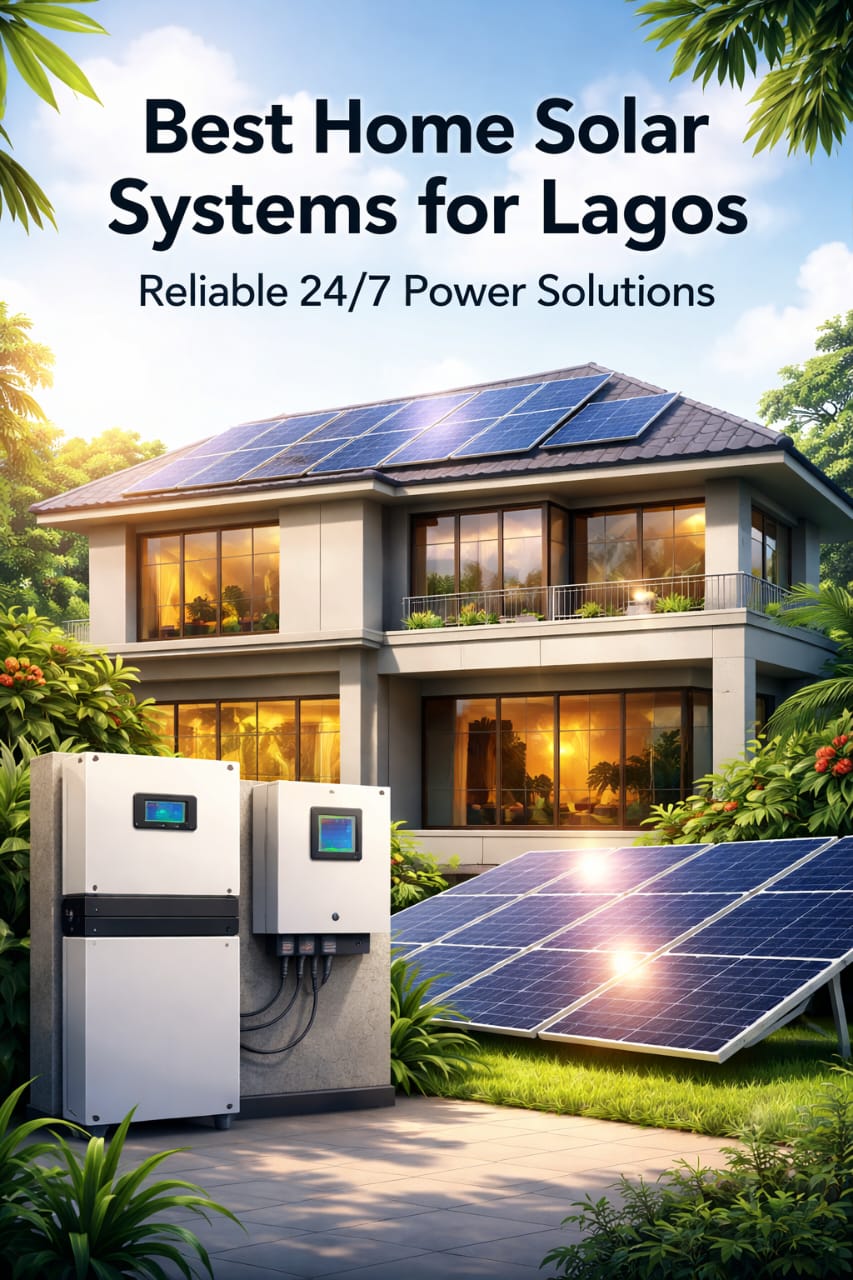
Hybrid Systems (The Lagos Sweet Spot)
Hybrid systems combine:
- Solar panels
- Battery storage
- PHCN connection
- Optional generator
They automatically switch between sources and prioritize solar energy. For most Lagos households that want 24/7 reliability without constant generator noise, hybrid is the most practical solution.
3. Realistic Hybrid System Sizes and Costs (2026)
Here’s what typical Lagos homes are installing this year:
1–2 Bedroom Flat
System size: 3.5 kW
Powers: Lights, fans, TV, router, small fridge
Estimated cost: ₦2.2M – ₦3.5M
3–4 Bedroom Home
System size: 5 kW
Powers: Essentials, fridge, water pump, one small AC (daytime use)
Estimated cost: ₦3.4M – ₦6.0M
Larger Duplex or High-Load Home
System size: 6–10 kW
Powers: Multiple AC units, larger pumps, home office loads
Estimated cost: ₦6.5M – ₦13.0M
These figures reflect quality components and professional installation in Lagos.
4. Solar Panel Sizing and Pricing in Lagos
Lagos has strong sunlight conditions. On average, 1 kW of properly installed panels can generate 4–5 kWh per day.
Typical 2026 pricing:
- 200 W panels: ₦50,000 – ₦65,000
- 300 W panels: ₦70,000 – ₦85,000
- 550 W panels: ₦130,000 – ₦150,000
- 600 W+ panels: ₦148,000 – ₦165,000
Panel selection depends on:
- Roof structure
- Orientation
- Shading from nearby buildings or trees
- Future expansion plans
A well-designed layout can significantly improve performance without increasing cost.
5. Battery Storage: The Key to True 24/7 Power
Without batteries, solar only works when the sun is shining.
Battery storage allows you to:
- Use solar energy at night
- Stay powered during PHCN outages
- Reduce generator dependency
- Protect sensitive appliances
For homes aiming at full reliability, storage is not optional — it’s central to the design.
Battery choice also affects long-term cost:
- Lithium batteries cost more upfront but last longer.
- Tubular batteries are cheaper initially but may need replacement sooner.
The right choice depends on your budget and usage pattern.
6. Inverters and Smart Monitoring
The inverter is the brain of the system.
It converts DC electricity from panels and batteries into AC power for your home. In hybrid systems, it also manages switching between solar, battery, PHCN, and generator.
For a 5 kW target, installers often recommend a 5 kVA or slightly higher capacity inverter to handle startup surges from pumps and AC compressors.
Smart monitoring systems allow you to:
- Track daily production
- Monitor battery health
- Identify overloads early
- Adjust usage patterns
This improves efficiency and extends battery life.
7. Installation Quality Matters More Than Most People Think
In Lagos’ humid and sometimes coastal environment, poor installation can shorten system lifespan.
Common problems include:
- Undersized breakers
- Poor cable routing
- Weak mounting structures
- Incorrect generator integration
Professional installation and periodic inspection help prevent performance loss and safety risks.
A solar system should feel invisible — it should just work.
8. Estate and Mini-Grid Options
Not every resident lives in a standalone building.
For gated communities and shared compounds, mini-grid style systems can power multiple homes from a centralized solar and battery plant.
Benefits include:
- Reduced generator noise
- Cleaner air
- Lower collective fuel spending
- Stable communal services (street lights, boreholes, security systems)
This approach works well in organized estates across Lagos.
9. Budgeting and Payback in 2026
A 5 kW hybrid system costing ₦3.4M – ₦6.0M may sound significant upfront.
However, for households running generators daily, fuel and maintenance can cost hundreds of thousands of naira per year.
If solar cuts generator usage by 60–80%, typical payback periods fall between 4 and 7 years.
Beyond money, there are non-financial returns:
- Quiet evenings
- No fuel stress
- Reliable power for remote work
- Stable electricity for children studying
Those benefits are harder to price, but they matter.
10. How to Choose the Right Configuration
The best system is not the biggest one. It’s the one designed around your real life.
A proper process includes:
- Load assessment
- Roof and shading survey
- Configuration planning
- Component matching
- Professional installation
- Ongoing monitoring
When designed correctly, your solar setup becomes a long-term energy strategy — not just a quick installation.
Conclusion
For Lagos households in 2026, reliable power is about resilience.
In most cases, a properly sized hybrid system offers the best balance of independence, flexibility, and long-term value.
With the right design, quality components, and good installation, solar can move you away from daily generator stress and into predictable, stable electricity that supports work, family life, and future growth.