How to Choose Portable Solar Kits for Remote Work: A Complete Buyer’s Guide
Remote work has become a normal part of modern life. In early 2024, about 22.9% of employed people worked remotely or teleworked, which means reliable electricity is now just as important as having a good laptop or internet connection.
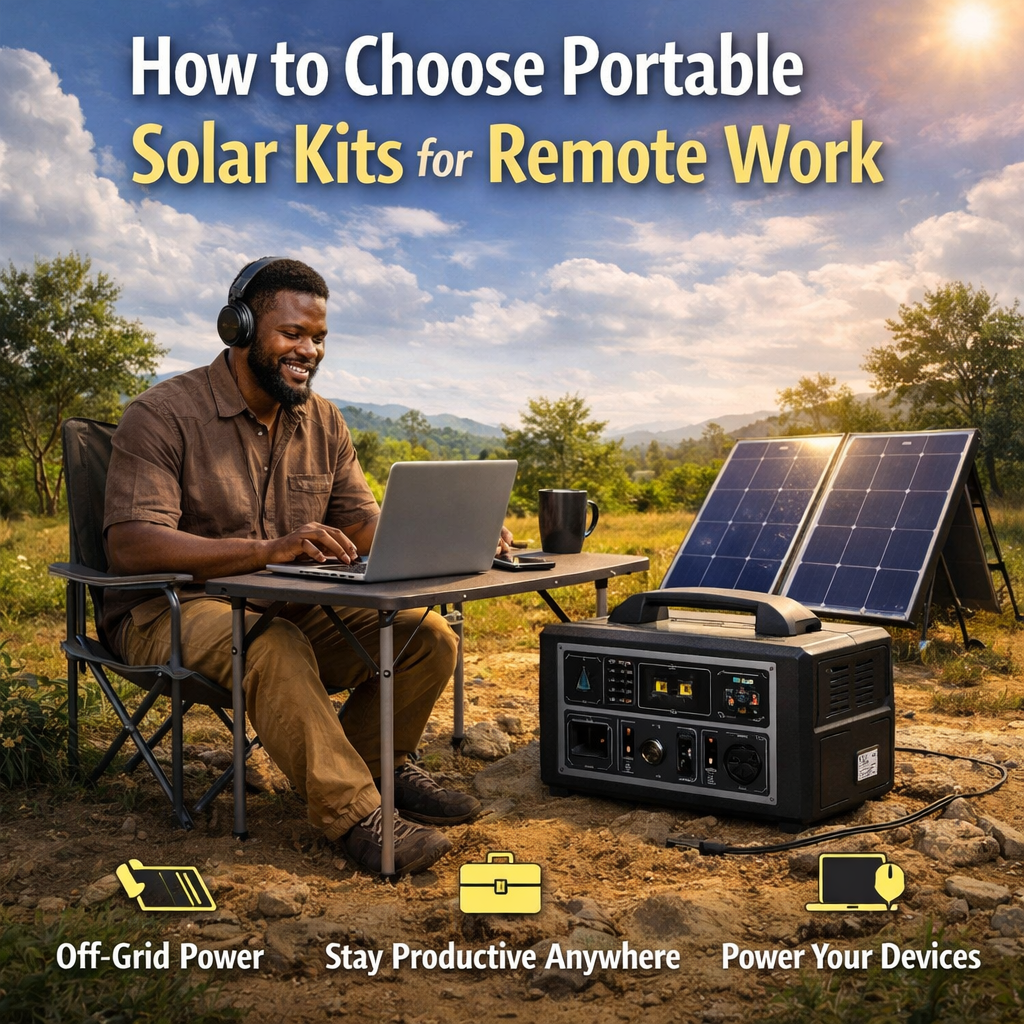
For professionals working in locations with unreliable power, portable solar kits provide a practical solution. They allow you to stay productive whether you are working from home, traveling to field locations, or operating in areas with limited grid electricity.
This guide explains how portable solar kits work, how to choose the right size, and how to build a system that can support a full remote workday.
Key Takeaways
Question Quick Answer What size portable solar kit do I need for remote work?Estimate the total wattage of your devices and how long you use them daily. For laptops, phones, and routers, most professionals need a compact solar panel paired with battery storage.Can a portable kit power a full remote workday?Yes. With proper sizing and a good battery system, portable solar kits can power laptops, phones, and networking equipment throughout the day.What if I also need backup power at home?A portable kit can work alongside a permanent home solar system to provide backup power during outages.How do I know which components to combine?Start with an integrated kit or choose compatible panels, batteries, and inverters designed to work together.Can solar support business-grade remote work setups?Yes. Solar systems can scale from individual portable kits to larger setups for small teams or mobile offices.Who installs and maintains the system?Professional solar installation and maintenance services help ensure long-term reliability and performance.Where can I get tailored advice?Solar providers can design systems based on your exact power needs and work environment.
1. Understand Your Remote Work Power Needs
Before choosing a portable solar kit, it is important to understand what devices you need to power and how long you use them each day.
Most remote workers use a small set of electronics such as:
- Laptop
- Smartphone
- Tablet
- Wi-Fi router or mobile hotspot
- LED desk light
A simple way to estimate your energy usage is to list your devices and their power ratings, then multiply each device’s wattage by the number of hours you use it daily.
Typical device power consumption:
- Laptop: 40–90 watts
- Smartphone charging: 5–15 watts
- Portable router or modem: 5–15 watts
- LED desk light: 5–10 watts
This calculation gives you your daily energy requirement in watt-hours, which determines the solar panel size and battery capacity you need.
If you frequently work in off-grid locations, battery storage becomes essential so you can store solar energy during sunny hours and use it later.
2. Match Panel Wattage and Battery Capacity to Your Workday
Once you know your daily energy needs, the next step is selecting solar panels and storage that can meet those requirements.
Modern monocrystalline solar panels typically operate at 20–23% efficiency, meaning even compact systems can generate significant electricity under good sunlight conditions.
For example, a 400-watt solar panel can generate useful energy for laptops, communication devices, and other small electronics when exposed to strong sunlight for several hours.
However, the most important factor is not just panel size but the balance between solar generation and battery storage.
Your battery should be able to store enough energy for at least one full workday, with additional capacity to handle cloudy weather or longer work sessions.
Example Component Setup
Component Example Indicative Price Best For Solar Panel Ultra Max Solar Panel 400W$299High-demand remote work Battery Storage EcoVault Energy Storage Battery$5499Long-duration power backup
3. Decide How Portable Your Solar Kit Needs to Be
Different remote workers have different mobility needs, so portability is an important factor.
If you mainly move between home and nearby workspaces, a slightly larger solar kit may be acceptable.
However, professionals who travel frequently or carry equipment by hand should consider lighter, compact systems.
Foldable solar panels and integrated portable power stations are often the most convenient options for mobile professionals.
Portable solar systems are particularly useful for:
- Field engineers working at remote sites
- Freelancers working in rural locations
- Content creators filming outdoors
- NGO teams working in communities with weak grid power
The goal is to balance power capacity with manageable weight and portability.
4. Plan for Long Work Sessions With Reliable Storage
Many remote professionals work long hours, sometimes exceeding 40 hours per week.
For this level of usage, battery storage becomes critical.
A portable solar kit designed for professional use should include enough battery capacity to power your primary devices for an entire workday.
High-capacity storage systems allow you to store excess solar energy during the day and use it later in the evening or during outages.
Reliable battery systems provide several advantages:
- Stable power for laptops and networking equipment
- Backup electricity during grid outages
- Extended work hours even when sunlight is limited
For professionals who rely on uninterrupted connectivity, dependable storage is one of the most important parts of the system.
5. Consider Hybrid Work and Home Office Backup
Many professionals now follow a hybrid work model, splitting time between home, office, and field locations.
In these situations, a portable solar kit should integrate easily with a larger home solar system.
A typical home system may include:
- Solar panels
- Inverter
- Battery storage
Portable panels or power stations can then be used as a mobile extension of this setup.
This approach works well for people who:
- Work from home but travel occasionally
- Experience frequent grid power interruptions
- Need guaranteed power during important meetings or calls
By combining portable and residential solar systems, you can maintain reliable electricity wherever you work.
6. Consider Durability and Reliability
Portable solar equipment often operates in challenging environments such as outdoor sites, farms, or temporary workspaces.
Because of this, durability is important.
When comparing solar kits, consider the following features:
- Weather resistance and water protection ratings
- Strong panel frames and protective casing
- High-quality connectors and cables
- Long battery cycle life
- Reliable manufacturer warranties
Equipment designed for field use should withstand heat, dust, and occasional rain without performance issues.
7. Balance Budget and Future Growth
Choosing the right solar kit involves balancing performance with budget.
Many professionals begin with a small portable system and expand as their needs grow.
Example Solar Setup Stages
Stage Typical Components Best ForStarter200–400 W panel and small power station Students and occasional remote work Professional400 W panel with mid-size battery Full-time remote workers Advanced Multiple panels, inverter, and large battery storage Teams or business operations
Viewing your solar system as a long-term productivity investment helps justify the cost, especially when it prevents work interruptions.
8. Solar-Powered Workspaces and Mobile Offices
Some organizations require more than a single portable kit.
Solar-powered workspaces and mobile pods are emerging as solutions for teams working in remote environments.
These systems can support:
- Mobile service centers
- Field offices for NGOs
- Telehealth or banking kiosks
- Temporary business branches
Solar-powered work pods provide shaded, reliable environments where teams can operate equipment without relying on grid electricity.
9. Shared Solar Power for Remote Communities
In some locations, communities or estates are building solar mini-grids that power multiple homes or businesses from a shared energy system.
For remote workers, this can provide a stable base where homes or offices always have electricity.
Portable solar kits then become a flexible add-on for travel or field work.
This combination of community solar infrastructure plus portable kits creates a highly reliable energy ecosystem.
10. Professional Support for Solar Setup
Selecting the right solar equipment can feel complex, especially when comparing panels, batteries, and inverters.
Professional solar providers can simplify the process by offering:
- Energy assessments
- System design based on real usage
- Installation for permanent components
- Maintenance and upgrades over time
Working with experienced professionals ensures your solar system grows alongside your work needs.
Conclusion
Reliable electricity is essential for remote work. A well-chosen portable solar kit allows professionals to stay productive anywhere without worrying about unreliable power.
Start by understanding your daily energy needs, then match solar panels, battery capacity, and portability to your working style.
With the right system, portable solar power can support laptops, communication equipment, and entire workdays in locations far from reliable grid electricity.
As solar technology continues to improve, portable systems will play an increasingly important role in helping professionals work confidently anywhere.